

 Home
HomePAT Testing Medical Equipment

Medical electrical equipment is outside the standard PAT testing procedures described in the IET Code of Practice and should not be tested using standard PAT methods. Instead, it is inspected and tested to IEC 62353 (commonly referenced in the UK as BS EN 62353).
IEC 62353 includes some tests that will feel familiar, such as earth continuity and insulation testing, but the limits and procedures can differ. It also includes measurements that standard PAT does not cover, such as leakage currents relating to patient-applied parts. These measurements can be very small (often below 0.01 mA), so appropriate test equipment and specialist competence are required.
"Sensitive medical equipment, e.g., ECG, infusion pump, ultrasound machines, X-ray equipment etc., should only be tested by a competent person, with suitable experience, familiar with BS EN 62353. Equipment covered by and requiring inspection and testing in accordance with BS EN 62353 is outside the scope of this Code of Practice" - IET Code of Practice.
How to Identify Medical Electrical Equipment
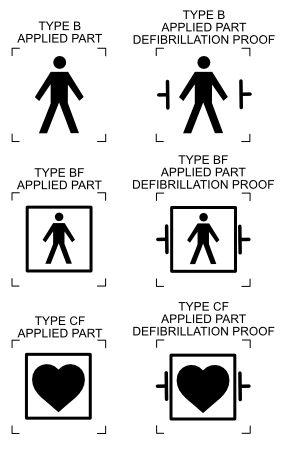
Medical electrical equipment is not limited to hospitals. It is also commonly found in GP surgeries, clinics, dentists, care settings and treatment rooms. Where equipment has patient-applied parts, it is usually marked with a B, BF or CF symbol. If these markings are present, the equipment should not be tested using standard PAT procedures.
If you are unsure whether an item is medical electrical equipment, check the rating label, the instructions, and the device classification. When in doubt, treat it as medical equipment and refer it for IEC 62353 testing.
Why Standard PAT Testing Is Not Appropriate
Medical safety testing is designed around different risk considerations, particularly where a patient may be connected to the equipment. IEC 62353 includes test methods and limits that account for patient-applied parts and for leakage current measurements that standard PAT does not address. Using the wrong test approach can produce misleading results and, in some cases, can be inappropriate for the device.
Normal Condition and Single Fault Conditions
Medical electrical safety testing uses the concepts of normal condition and single fault condition. Single fault conditions simulate the failure of one protective measure, for example interruption of the protective earth conductor, to confirm that a single fault does not create an unacceptable hazard. This is another reason medical equipment testing should be carried out by a competent person using the correct standard and equipment.
What to Do If You Find Medical Equipment During PAT Testing
- Do not test it using standard PAT procedures.
- Record it as excluded from PAT testing and note that IEC 62353 (BS EN 62353) applies.
- Refer it to the site’s medical engineering team or a competent person with IEC 62353 experience and suitable test equipment.
Further Reading
This EBME (Electrical and Biomedical Engineering) article provides a clear overview of medical electrical safety tests and how they differ from standard PAT procedures: Electrical safety tests (medical equipment).
Training for Medical Equipment Testing (IEC 62353)
For those who need specialist training in the safety testing of medical electrical equipment to IEC 62353 (BS EN 62353), Eastwood Park Training list a dedicated course here: Safety testing of electrical medical equipment (IEC 60601-1 / 62353).
PAT Testing Training for Non-Medical Equipment
Medical electrical equipment should be tested to IEC/BS EN 62353, but most other workplace electrical equipment falls under in-service inspection and testing. If you are unsure where the boundary sits, see what PAT testing covers (scope and exceptions). If you need training for non-medical equipment, we offer a range of PAT testing courses.